
Alternative Investment Fund (AIF)

What is an Alternative Investment Fund (AIF)?

An Alternative Investment Fund (AIF) is a privately pooled investment vehicle established or incorporated in India that collects capital from sophisticated and high-net-worth investors to invest in assets beyond traditional equity and debt. AIFs focus on alternative asset classes such as private equity, venture capital, real estate, hedge funds, leveraged buyouts, and other niche strategies. They provide investors access to exclusive investment opportunities with potentially higher returns, albeit with higher risks and longer lock-in periods. The minimum investment size generally starts at ₹1 crore for most investors.
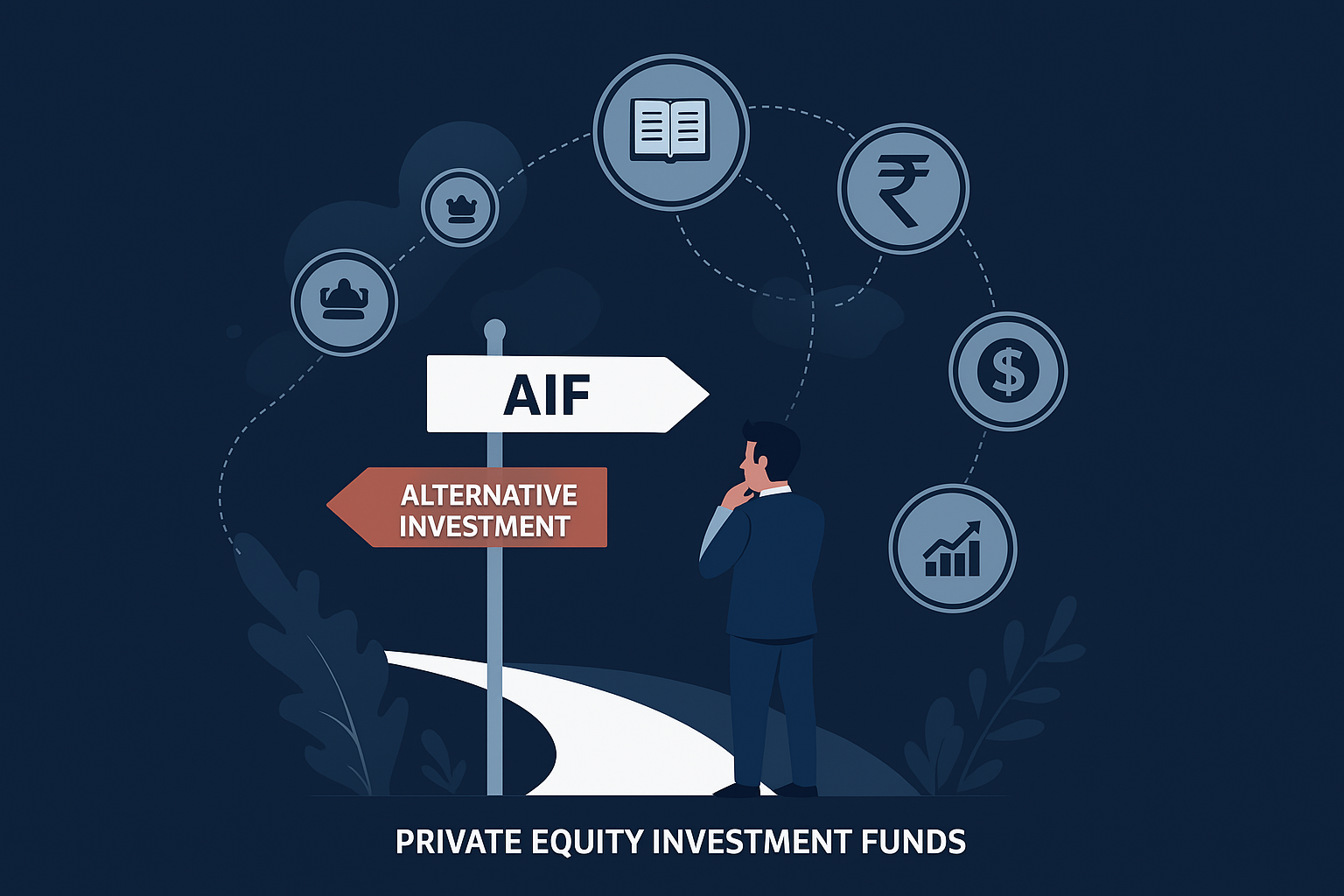
Types of AIF

  • Category I AIF: Invests in socially responsible sectors like startups, early-stage ventures, infrastructure, and SMEs, often enjoying government incentives and lower risk.
  • Category II AIF: Includes private equity funds, debt funds, and funds undertaking specific investment strategies without leverage, aimed at wealth creation.
  • Category III AIF: Engages in complex trading strategies including leverage, short selling, and diverse derivatives, with higher risk and return potential.

How AIF differs from regular mutual funds

  • AIFs are privately pooled funds with eligibility restrictions, whereas mutual funds are open to general investors.
  • Higher minimum investment thresholds (₹1 crore) compared to mutual funds (₹100-₹500).
  • Focus on alternative assets and niche strategies beyond traditional equity and debt.
  • Longer lock-in periods and limited liquidity compared to mutual funds.
  • Regulatory monitoring by SEBI, but with more strategic flexibility for fund managers.

Key features and benefits

  • Access to exclusive investment opportunities across diverse alternative asset classes.
  • Potential for higher returns compared to traditional funds through innovation and niche markets.
  • Professional fund management ensuring strategic investment and monitoring.
  • Diversification benefits due to lower correlation with traditional asset classes.
  • Some categories enjoy tax efficiencies, especially when structured through GIFT City or IFSCs.


AIFs suit investors who:

  • Are high-net-worth individuals or institutional investors with ₹1 crore or more to invest.
  • Seek diversification beyond equities and fixed income into alternative assets.
  • Are willing to accept higher risks, lower liquidity, and longer investment horizons.
  • Have adequate financial sophistication and access to professional advice.

Note that AIFs carry risks including market, liquidity, strategy-specific, and regulatory risks. Tax treatment varies significantly by category and location. Consultation with financial and tax advisors is recommended before investing.

Who should avoid AIFs?

  • Investors seeking high liquidity and low-risk standardized investment products.
  • Those with limited capital or investment goals requiring short-term access.
  • Conservative investors uncomfortable with complex products and higher volatility.

Disclaimer: Investments in Alternative Investment Funds are subject to market, liquidity, and strategy risks. Past performance does not guarantee future results. Investors should carefully read all offer documents and seek independent financial and tax advice before investing.